

The beginning of class can feel chaotic. Meaningful science bell ringers help students settle in while giving teachers time to take attendance and check in with students. They create a smoother start to class while helping students shift into science thinking right away.
Below are my favorite tips for creating a successful science bell ringer or warm up routine. Plus, you can grab my FREE bell ringer template here.
Science Bell Ringers Are the Most Important Part of Your Routine
The first few minutes of class set the tone for the entire period. When students enter the room without structure, the chaos often continues throughout class. However, a strong routine helps students quickly transition into learning.
Many teachers struggle to create structure during those first few minutes of class. Below are my favorite tips for making science bell ringers run better all year long.
5 Tips for Making Your Science Warm Up Routine More Effective
Tip # 1: Use Science Bell Ringers Every Day
Things like shortened schedules, picture day, assemblies and special events can easily disrupt classroom routines. Sometimes, it feels tempting to skip the warm up so there is more time for content. However, changing the routine often leads to more disruptive behavior and wasted time.
Instead, starting class the same way each day helps student understand that the expectations are the same. As a result, students settle in more quickly. As a result, students settle in more quickly.
Tip #2: Use the same template each week.
Over the years, I’ve tried several different systems for my warm-up routine. However, using a consistent template is the most effective strategy I’ve seen. Simply display the daily question on your agenda slide while students complete their warm up using the same format each week.
Some teachers prefer keeping science warm ups directly in student notebooks. However, I’ve found this often becomes messy or difficult for students to manage. A separate bell ringer template keeps everything more organized and makes it easier for students to find their work quickly at the start of the period.
To make things easier, you can grab my FREE science bell ringer template here.
Tip #3: Don’t give students too much time.
Too much unstructured time often leads to disruptive behavior. A common mistake is extending the time that students have to complete their bell ringer or warm up. Instead, set a timer to create urgency and provide additional structure. Meanwhile, work with individual students who need help transitioning into class more effectively. In most cases, three minutes of writing time is a good place to start.
Its also important to note that I see a lot of wasted time when teachers review the bell ringer. Starting a whole-group discussion can slow down the pace of the class. Instead, consider giving student the opportunity to share with a partner or in their table groups. If you’d like tips for getting students to talk, check out this post.
Tip # 4: Create an optional holding place for students who tend to lose papers.
Most students can keep track of their science bell ringers without extra help. However, a few students may need additional organization support. As a person with ADHD, I recommend create a designated spot for students to store their bell ringers between classes.
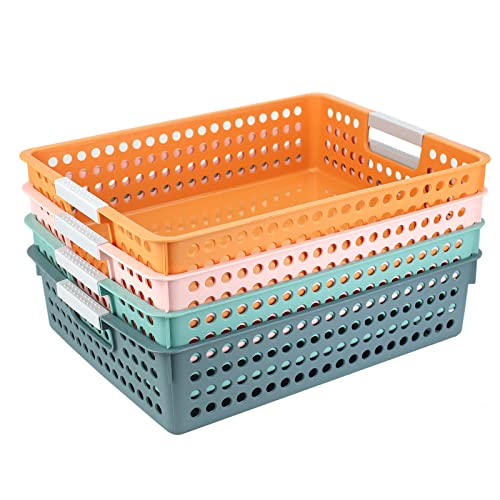
I like using a small bin (like the ones pictured below) sits right by the classroom door. Students can quickly grab their materials as they walking into class. Since only a few students are using this option, it is easy for students to find their work.
Tip # 5 Stamp the science bell ringers daily.
Stamping science bell ringers is another way to create urgency and accountability. Students know that their work will be checked quickly. This encourages them to get started right away.

Also, this system helps monitor completion of the warm ups without spending a large amount of time grading them each day. Plus, stamping bell ringers creates an easy classroom job for a student helper. Here are some stamps I like using.

Low-Prep Ideas for Engaging Science Bell Ringers
Science bell ringers work best when they combine routines with meaningful thinking. However, they also need to be realistic to prep on a regular basis.
Below are a few-low prep warm-up ideas that keep studnets engaged without adding extra work to your plate.
Use a notice and wonder routine.
A Notice and Wonder routine is one of my favorite-low prep science bell ringers. Students observe a video (preferably without the sound), image, graph, etc and record what they notice and wonder. This strategy helps students to practice their observation skills and access prior knowledge. It’s also a great way for teachers to find out what they already know. Plus, its works all all grade levels.
For simple ideas, check out my post on Notice and Wonders.
Provide a Scenario
Another simple science bell ringer idea is to provide students with a short scenario connected to a common misconception. Then, ask students whether they agree or disagree and explain their reasoning.
The strategy encourages critical thiking while helping uncover student misconceptions before starting a lesson. It also works well as a quick formative assessment.
Here is an example related to evaporation:
“Hannah spilled water on the floor. When she came back a few hours later, the water was no longer there. Hannah explained that the water had seeped into the floor. Do you think she was correct? Why or why not?”
Students usually come up with several different explanations. For example, some may argue that the answers depend on the type of floors. Other may explain that the room temperature matters.
No matter what students say, this discussion helps reveal prior knowledge and misconceptions before starting the lesson. Plus, students are already thinking about concepts before moving into the next activity.
Ask what they already know about a topic.
One of the easiest science bell ringers is simply asking students what they already know about a topic. For example, students could spend three minutes writing down everything they know about energy.
This quick activity helps uncover prior knowledge and misconceptions while getting students thinking about the topics right away. Plus, it requires almost no prep.
Frequently Asked Questions About Science Bell Ringers
How do I grade science bell ringers?
Generally, science bell ringers are not intended to assess mastery of content. Since students complete them before instruction begins, their thinking will often change throughout the lesson.
While bell ringers can provide useful insights into prior knowledge and misconceptions, they do not always give a fully accurate picture of student understanding. Because of this, I prefer not to grade them or to count them as only a very small percentage of a students grade.
Some teachers create a separate practice or classwork category in their gradebook for warm ups or similar activities.
What should I do when a student is absent?
When a student is absent, I usually excuse the science bell ringer. The most valuable part of the activity is often the thinking and discussion that happen in class and those experiences are difficult to recreate later.
At the beginning of class, I simply mark the missed warm up as excused on the student’s template.
If the bell ringer is included in the gradebook, many online grading systems allow you to adjust the total possible points for an individual student. For example. If a student misses one out of five bell ringers, I would record the assignment as 4/4 instead of 5/5. This keeps the absence from positively or negatively affecting the student’s grade.
Should students write down the warm up question?
No. Warm ups or bell ringers are meant to be quick activities. Having student copy the entire question slows down the routine without adding significant academic benefit.
Instead, I like teaching students how to turn the question into the beginning of their answer. This helps students practice sentence construction while building a skill they can use across content areas.
Here’s an example:
Question: What is the difference between kinetic and potential energy?
Question Restated as an Answer: The difference between kinetic and potential energy is ____________________.


No Comments